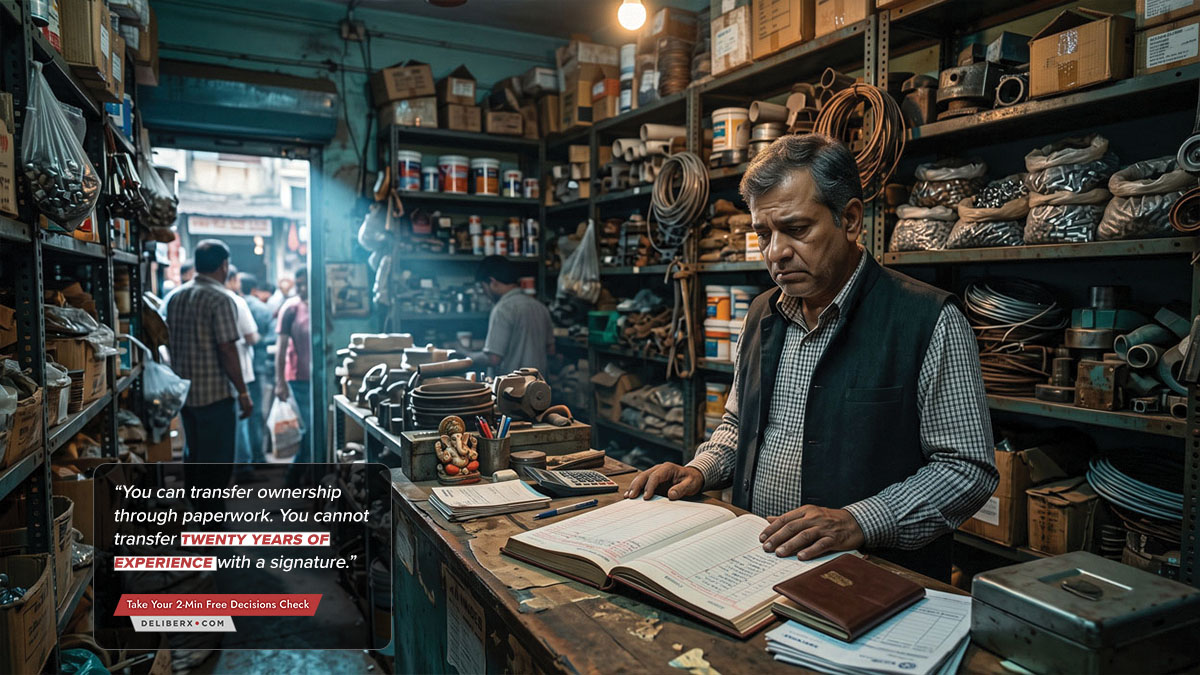
It was a good month for the shop. Sales were up and the accountant says the margin held. On Monday morning, the owner opens his banking app to pay his main supplier and finds there is not enough.
He has not lost money. He just cannot find it.
Some of it sits on his shelves as stock he bought in bulk before the festive season. Some of it sits with three regular customers who buy on sixty days’ credit. And his supplier, who once gave him forty-five days, now wants payment in fifteen.
This is the part of business a profit statement does not show well. Profit tells you whether a sale was worth making. Cash tells you whether you can survive until you are paid for it.
Accountants have an old line for this. Revenue is vanity, profit is sanity, cash is reality. It sounds like a slogan until you are the one standing at the bank counter.
The idea behind it has a simple name: the cash conversion cycle. It counts how many days your money stays locked up, from the day you pay for stock to the day a customer’s payment reaches your account. Days the stock sits, plus days customers take to pay, minus days your suppliers allow you.
Every day added to that cycle is another day your own money funds the business. A shop can grow and stay profitable while that number quietly lengthens. More stock. More credit to good customers. Tighter terms from suppliers. Each decision looks sensible alone. Together they empty the account.
A simple illustration makes it concrete. Stock sits for sixty days. Customers pay in sixty. Suppliers now want payment in fifteen. That is one hundred and five days of your own money funding every sale.
Profit tells you the business is working. Cash tells you it will still be open next month.
So growth needs one extra question before every big order. Not only what you will earn. Also how long your money will be away.
You can shorten that time. Stock what moves rather than what feels safe. Agree credit terms before the order instead of after the invoice. Ask for part advance on large jobs. Pay suppliers on time and ask for better terms in return.
This month, work out your own cycle in days. If it has grown while sales grew, the shop may be full for the very reason the bank is empty.
DeliberX Ref: DXB-4.2 · Cash conversion cycle (Richards & Laughlin) · Count how many days your money is away
A full shelf can hide an empty account for a surprisingly long time.
Whether you read your business by sales or by cash is a pattern the Decision Check makes visible.
→ Take the 2-minute Decision Check