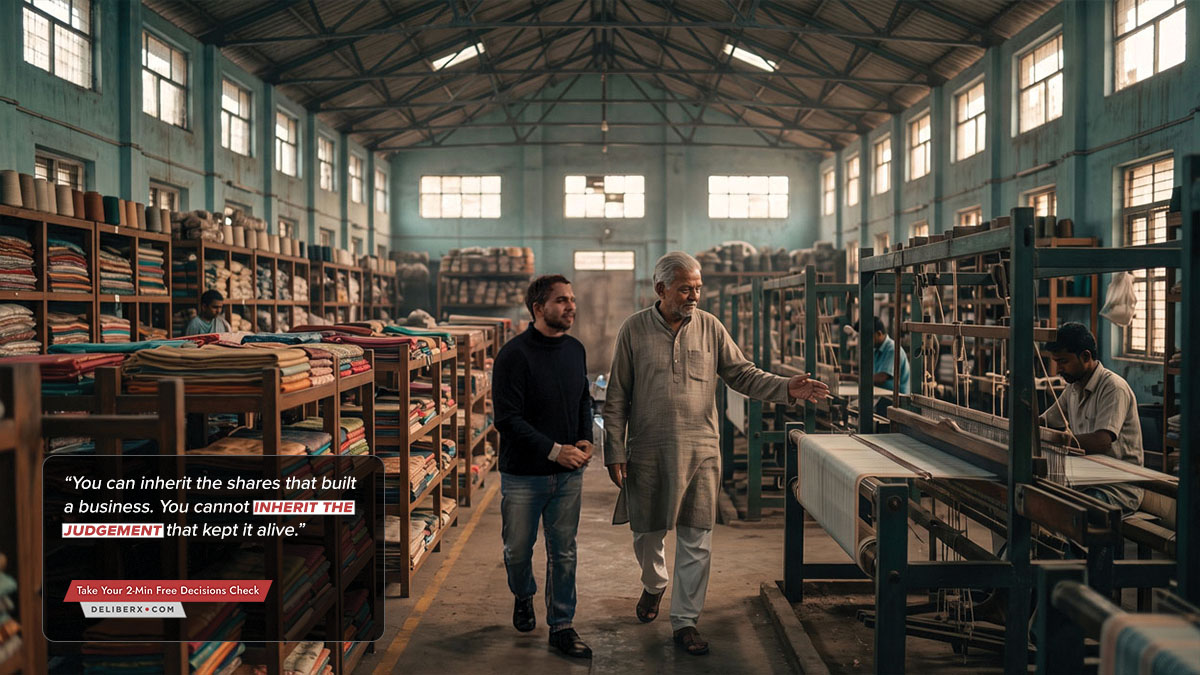
From the age of ten, Rohan heard the same line at every family function. “One day all this will be yours.”
After his MBA, he joined his father’s auto parts company in Pune. He learnt the plant, handled the big accounts and slowly took on more. The business grew. His father glowed. Relatives stopped asking about the future.
Nobody ever asked Rohan one question. “Do you want this?”
Maybe he does. Maybe he once wanted to teach. Or build software in another city. He has also watched his father miss birthdays and work through fevers to build this company. How do you tell a man like that you might want something else?
So he stays. He performs well. From the outside, succession looks solved.
Family business researchers Pramodita Sharma and P. Gregory Irving described four different roots of a successor’s commitment. Some stay because they want to. Some because they feel they ought to. Some because leaving would cost too much. Some because they see no other option. They proposed that these roots lead to different behaviour. Heirs who stay out of desire are more likely to go beyond their role. Heirs who stay out of duty tend to do what is expected.
Indian families often add their own layer. Joining the family firm can be expected so early that choice never feels available. The heir does not decide. He simply arrives.
For a founder, this is hard to hear. The business is decades of sacrifice. Handing it over feels like the biggest gift a parent can give.
A child can inherit your business without ever inheriting your reason for building it.
It is a gift. But a gift nobody is allowed to refuse slowly becomes a duty.
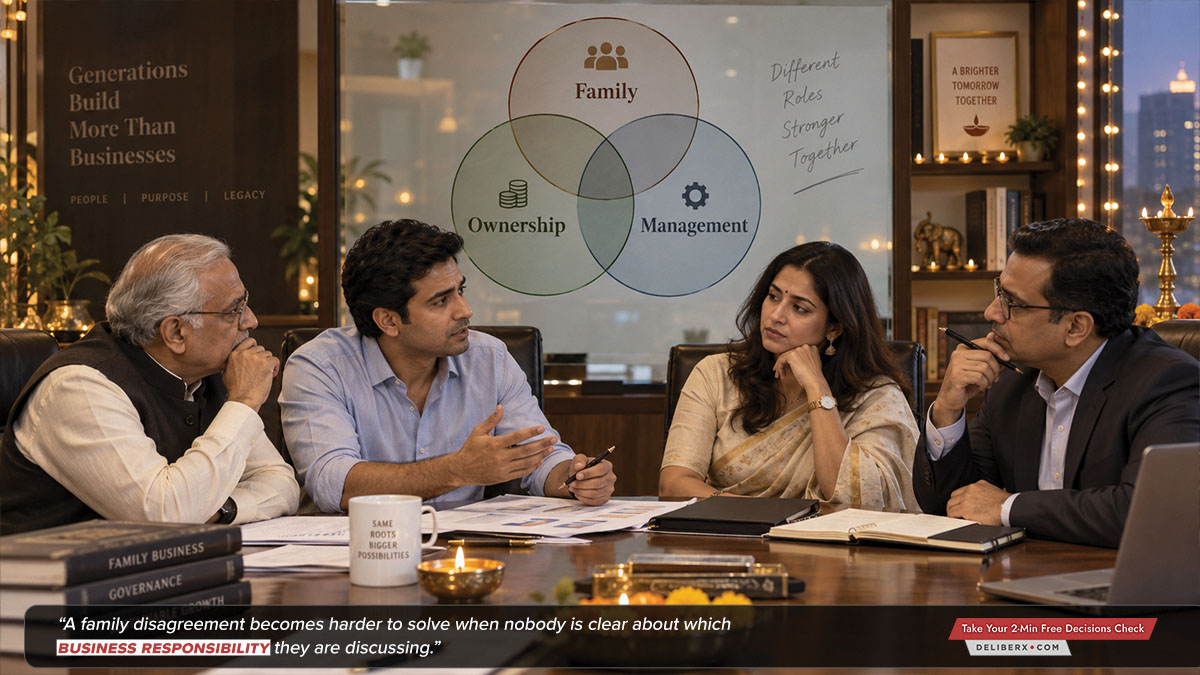
None of this means every heir should walk away. Family needs still matter. It means willingness belongs in the succession conversation alongside ability and ownership.
So have that conversation early. Make it safe to answer no. Ask your children what they want from their lives and where the business fits in. If the answer disappoints you, treat it as honesty rather than rejection. Offer real alternatives too. A few years working elsewhere first. A role that fits their strengths rather than their surname.
A successor who chose the business will fight for it. One who was simply handed it may only look after it.
DeliberX Ref: DXB-11.3 · Four bases of successor commitment (Sharma & Irving, 2005) · Make willingness part of the succession conversation
A competent heir can be trained. A willing one can only be asked.
Whether the next generation is living its own story or reciting yours is a pattern worth surfacing early.
→ Take the 2-minute Decision Check