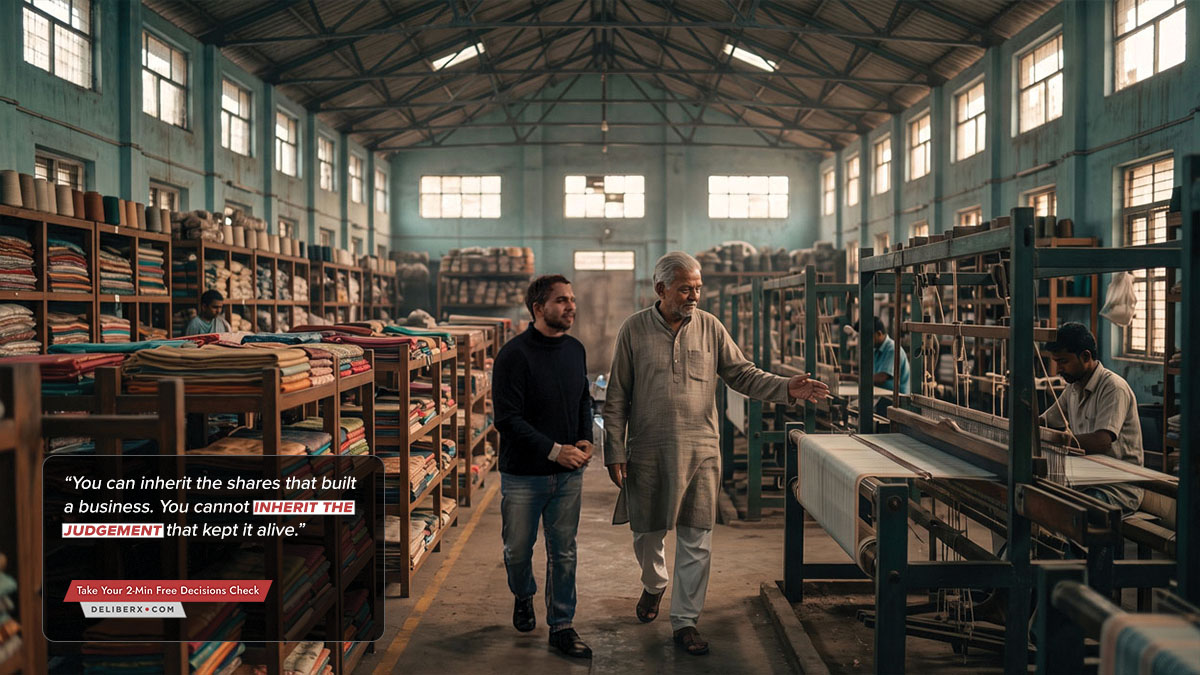
At Diwali lunch, the family business looks like one happy table. The father who founded it. The son who runs it every day. The daughter who owns a share but works in Bengaluru. A cousin who manages the factory and owns nothing.
By March, the same table has gone quiet. The argument is about this year’s profit.
The son wants new machinery because the old line breaks down every week. The daughter wants a dividend because her share has paid her nothing in five years. The father hears both and wonders when his children started putting themselves before the family.
Everyone is being reasonable. That is exactly what makes it hard.
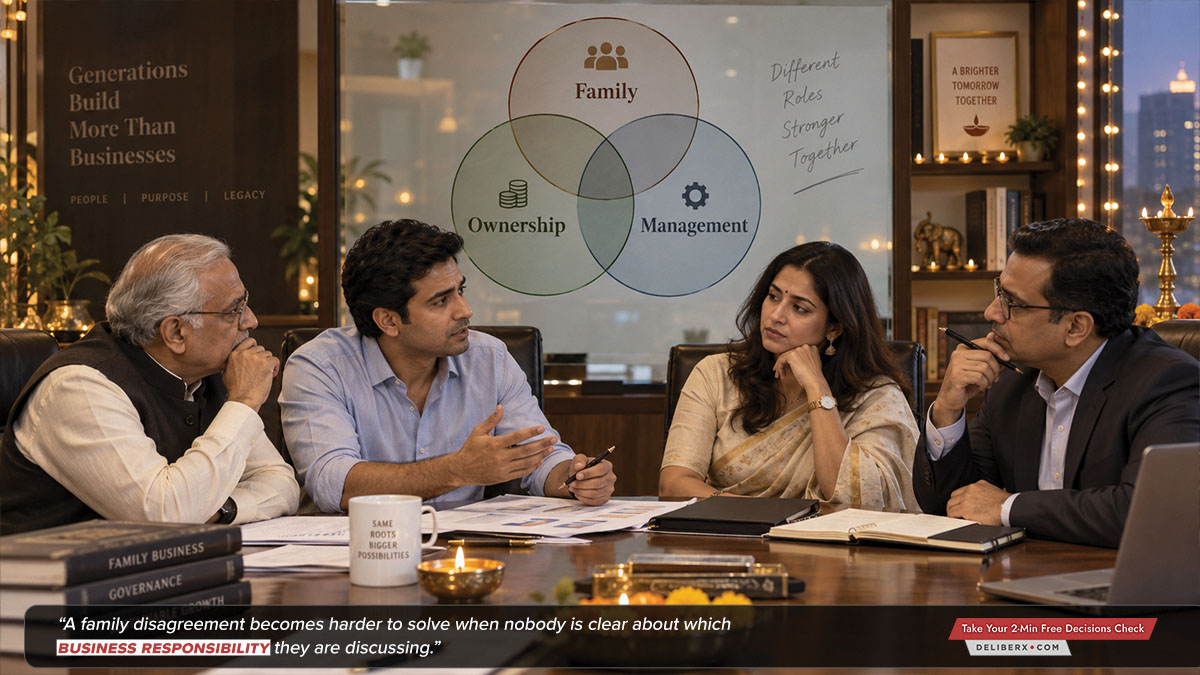
Look closer and they are not having one argument. They are having three at once. The son speaks as a manager who sees the machines. The daughter speaks as an owner who sees a return. The father speaks as a parent who sees his children drifting apart. Same words. Different chairs.
In 1978, Harvard researchers Renato Tagiuri and John Davis drew this as three overlapping circles: family, ownership and management. A person can sit in one, two or all three. Each circle carries its own fair questions. Family asks about belonging. Ownership asks about return. Management asks what the business needs to run well.
Trouble starts when a question from one circle gets answered from another. A request for a dividend is heard as disloyalty. A request for machinery is heard as the son taking over. Meanwhile the cousin, who has the clearest view of the factory floor, is not even in the room.
The circles also explain why the loudest voice often wins. Whoever sits in all three, usually the founder, can switch hats in the middle of a sentence. Everyone else ends up arguing with a moving target.
Most family fights are not about who is right. They are about which circle the question came from.
The fix is not to love each other more. It is to separate the conversations. Who decides capital spending? Who decides how much profit is shared? What numbers do owners see before either decision? And on a separate evening, where does the family talk about how everyone feels?
Clear roles will not end disagreement. They make it honest.
Next time a business meeting turns personal, pause and ask one question. Which circle is each of us speaking from right now?
DeliberX Ref: DXB-11.1 · Three-circle model (Tagiuri & Davis) · Separate the family, ownership and management conversations
The same words mean different things from different circles.
Knowing which chair you decide from is exactly what the Decision Check helps you name.
→ Take the 2-minute Decision Check