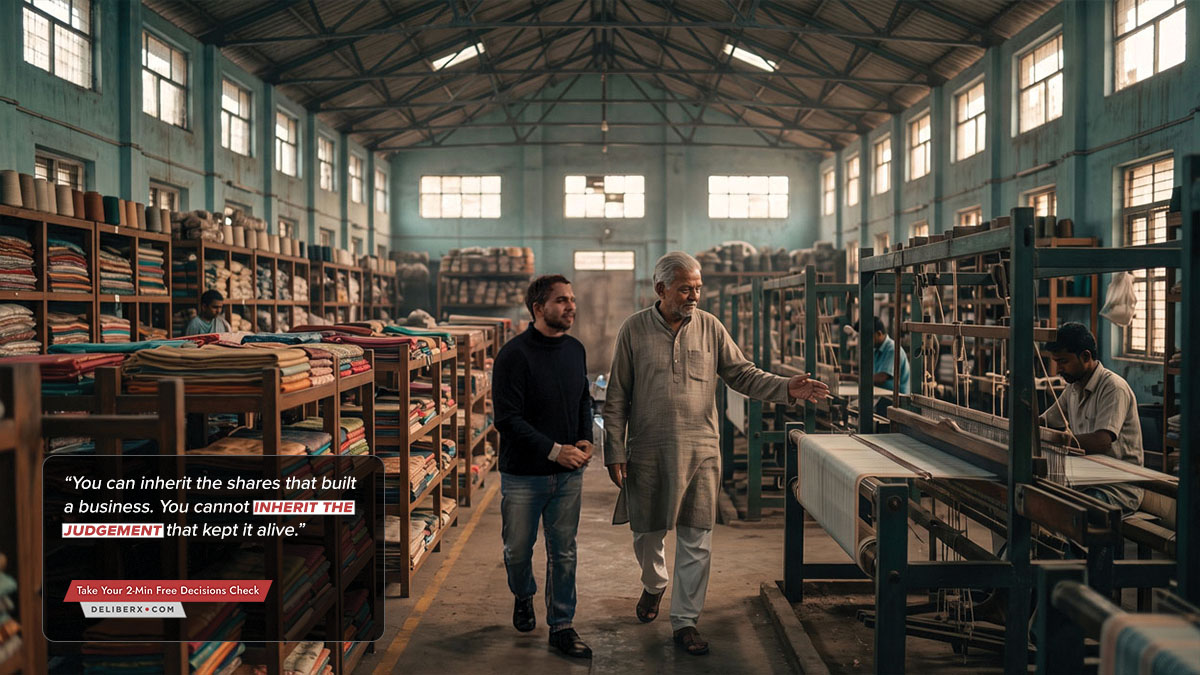
A father spends thirty years building a textile trading business in Surat. When it is time to hand over, the family sits with a lawyer. Shares are divided. The elder son becomes managing director. The signatures are done before lunch.
What no document records is how the father actually decided.
Why he once turned down a huge order from a loyal customer. Why he always kept three months of expenses aside, even in boom years. Why he stayed with a supplier who cost a little more but never missed a delivery in a bad monsoon.
None of these choices shows up on a balance sheet. They are the reason there is a balance sheet worth inheriting.
Many cultures carry a version of the same warning. English speakers say shirtsleeves to shirtsleeves in three generations. A Chinese saying holds that wealth does not last three generations. The first generation builds. The second remembers the struggle. The third often inherits the comfort without the lessons that created it.
It is a warning, not a law. Plenty of heirs grow far beyond what they received. The difference is usually whether judgement was handed over along with ownership.
Judgement does not travel through advice. It travels through practice. A successor who sat beside the founder while he made the hard calls knows the reasons. A successor who only watched the results knows the habits. Habits break the day the market changes.
Think of how a cricket coach teaches a young batter to leave a ball outside off stump. No lecture replaces facing a few hundred of them while the coach watches from the side.
You can hand over a business in a day. Handing over the way it was run takes years.
So start while the founder is still in the building. Let the next generation make real decisions with real money. Let them negotiate with the difficult supplier, turn down an order and sometimes get it wrong. Ask the founder to explain his reasons aloud instead of simply giving instructions.
Some of his methods will not survive. They should not. But a rule can only be changed wisely by someone who understands why it was made. A simple decision diary helps. Note the big calls, the reasons and what happened. Over a year it becomes the handover document no lawyer can draft.
If you are planning a handover, ask one honest question. Has the next generation learnt how I decide? Or only what I decided?
DeliberX Ref: DXB-11.2 · Three-generation proverb · Transfer judgement through practice before ownership
Shares move with a signature. The reasons behind the decisions move only with time.
What you are really handing down, control or a way of deciding, is a pattern worth naming early.
→ Take the 2-minute Decision Check