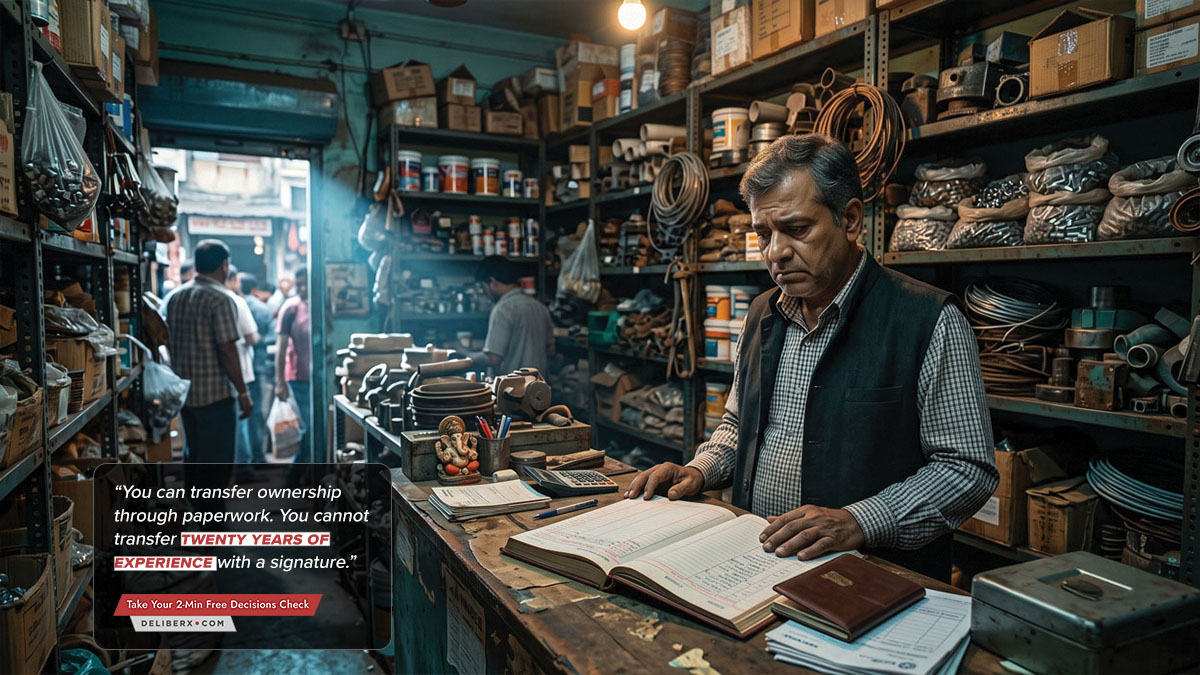
A consultant in Delhi scopes a new project, estimates the hours and prepares a quote for ₹80,000. Before he hits send, the doubts start. What if they think it is too much? What if someone else quotes ₹50,000?
He changes it to ₹60,000. The client says yes within minutes.
That speed should have told him something. Then come the extra meetings, a few small changes and one more round of revisions. He agrees to all of it to keep the relationship warm. By the end, he has worked nearly twice the hours he planned for three-quarters of the fee.
The same man negotiates hard with his printer, questions every vendor bill and switches internet providers over ₹200 a month. For his own time, he offers discounts before anyone asks.
Sometimes a lower price is strategy. You may be entering a new market, building a portfolio or winning a first client. Often, though, the cut has nothing to do with strategy. It is about avoiding a moment. The pause on a call. The chance of hearing no. The fear of looking expensive.
Roger Fisher and William Ury, in Getting to Yes, argue that you should know your best alternative to a negotiated agreement before you negotiate. They call it your BATNA. If you know what you will do when a client says no, you are far less likely to give away value just to hear yes.
Without that clarity, you end up negotiating against yourself, one quiet discount at a time. The client was never the one pushing the price down. The fear was.
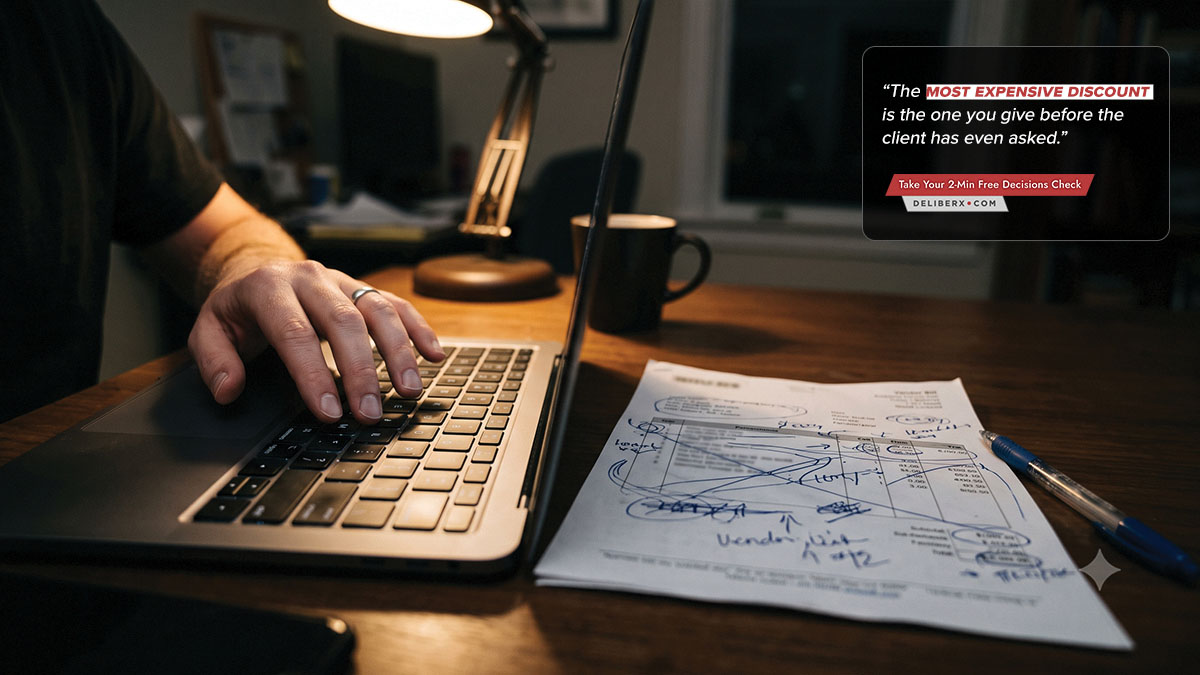
The most expensive discount is the one you give before the client has even asked.
Every early cut changes the maths of the work. Twice the hours at a lower fee means your earning per hour falls sharply. That time comes out of other clients, selling and growing the business. Extras you absorb without discussion also become part of what clients expect next time.
So decide before the conversation instead of during it. Estimate the time. Write down what the quote covers. Set a rate for additional requests. Know what you will do if they walk away.
Next time your finger hovers over a lower number, ask whether you have a business reason for it. Or whether you are simply paying to avoid hearing no.
DeliberX Ref: DXB-4.4 · BATNA (Fisher & Ury, Getting to Yes) · Decide your price and walk-away point before you negotiate
The supplier you never renegotiate with is the one who charges your business the least: you.
What your price says about your own worth is a quieter pattern than it looks. The Decision Check helps you catch it.
→ Take the 2-minute Decision Check